


I Usually Plan Every Shot But Not This One
 < User Story·Vol.13 >
8 min read
Welcome to the thirteenth edition of our User Story series.
This time, we're heading to Mangawhai, New Zealand, where Julie Machado (@juupmachado) captured the Milky Way above the coast while an unexpected glow of bioluminescence appeared in the waves below.
📸A Planned Trip, an Unplanned Image
I'm really big on planning. I'll spend days, months, or even years planning a shot. But this is one of the very rare times you'll hear me say that I didn't actually plan this image, which made me appreciate it even more.
I had one shot in mind when I came to Mangawhai, and even though I had never been there before, I had planned it well ahead using various apps like PhotoPills, Google Maps, and Stellarium. I got to the beach around sunset, but I had to wait for low tide to reach the spot, which wouldn't happen for a few hours.
🔦Finding the Rock After Dark
I remembered seeing this weird-looking rock when I had explored the area earlier in the day, and decided I could go back and photograph it to pass the time until the tide was right. based on my planning for the main shot, so I figured I could frame the rock
By the time I got there, the light was gone, and I found myself wandering around trying to figure out where the rock was. I usually mark the exact spot I want to shoot from on a map on my phone, which makes finding my way in the dark much easier. But since I hadn't planned this image, I didn't have that. I went back and forth a few times, only to eventually find it pretty close to where I'd started.
🍀When Preparation Met Luck
When I was setting up the camera, I could see through Bright Monitoring that there was bioluminescence in the waves as well, which I wasn't expecting at the beginning of winter. That's when I decided to keep the rock closer to the edge of the frame and let the sky and bioluminescencetake over.
I guess in the end this image was a combination of luck and an educated guess. I hadn't planned this particular shot, but I knew where the Milky Way would be and had a pretty good idea of how the scene could come together. The bioluminescence was just a very lucky bonus.
💡TIPS
1.Anchor Your Tripod
I carry a light trowel to bury the tripod feet in sand or soil, which helps prevent any movement once I start the tracking setup. I also carry a cloth bag that I can fill with rocks and hang from the tripod when burying the feet isn't possible.
2.Polar Align Faster with a Phone Mount
If using a phone to polar align, try Eric Wilkes' phone mount for the Move Shoot Move. It makes the process much quicker and easier, especially if you need to move the tripod and polar align again.
3.Check for Focus Slips Constantly
I usually take 3 or 4 images per panel and quickly check that they're okay before moving on to the next one.
4.Avoid Creating Light Pollution
Be mindful of becoming the light pollution yourself. Aim for torches with lower brightness, and use them for safety when moving through difficult environments.
Other than that, keep it to red or no light. There might be other people around you trying to enjoy the night sky too, and there will certainly be animals around you that don't want to be bothered by lights.
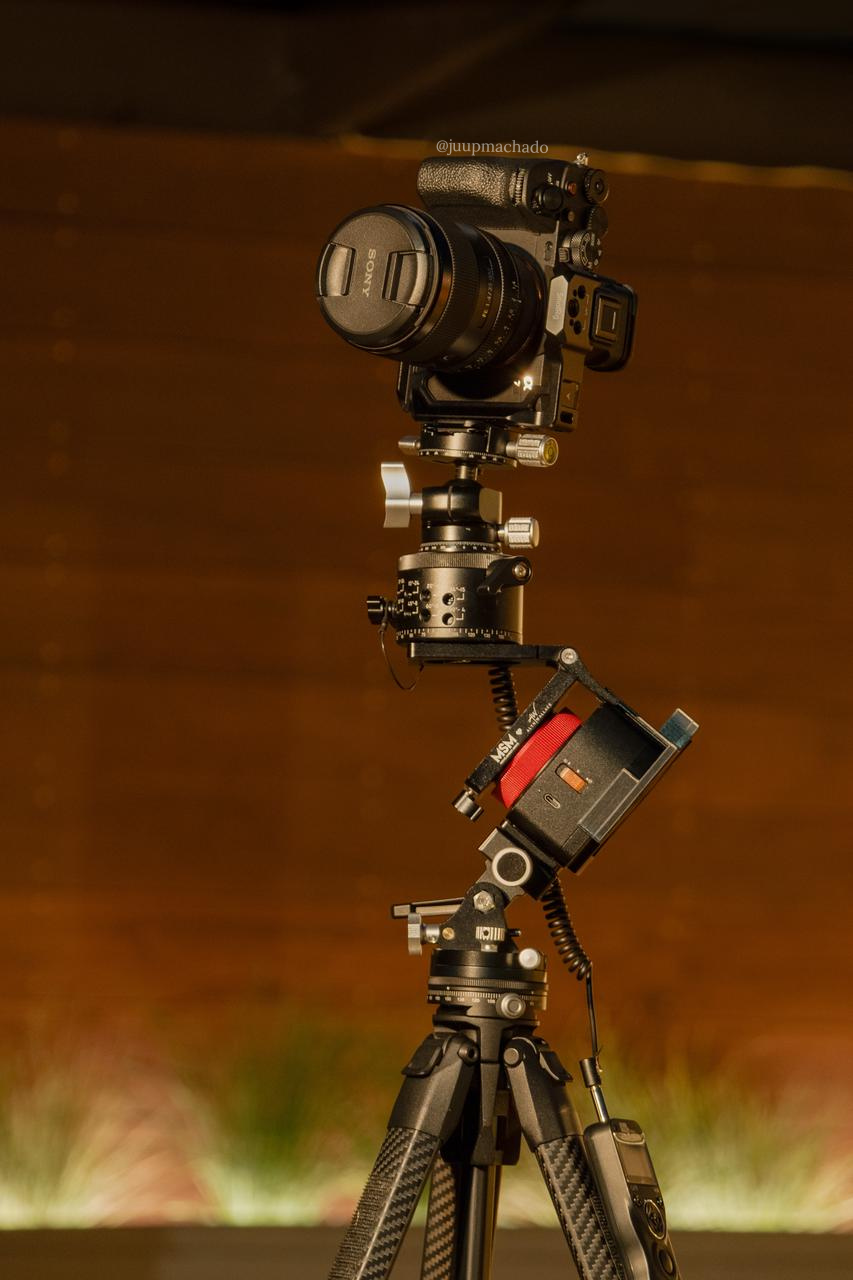
Gear List |
|
|---|---|
|
Camera |
Sony A7 IV astro modified |
|
Lens |
Sony 35mm 1.4 GM |
|
Star Tracker Kit |
|
|
Polar Alignment Tool |
|
|
Accessory |
Sunwayfoto Indexing Rotator |
|
Accessory |
Astronomik H-alpha 12nm |
|
Accessory |
Cokin P830 |
|
Tripod |
Peak Design travel Tripod |
Leave a comment